
A shortlist should save time, improve interview quality and help employers make hiring decisions faster. Yet many shortlists contain candidates who are unsuitable, unavailable or unlikely to accept an offer.
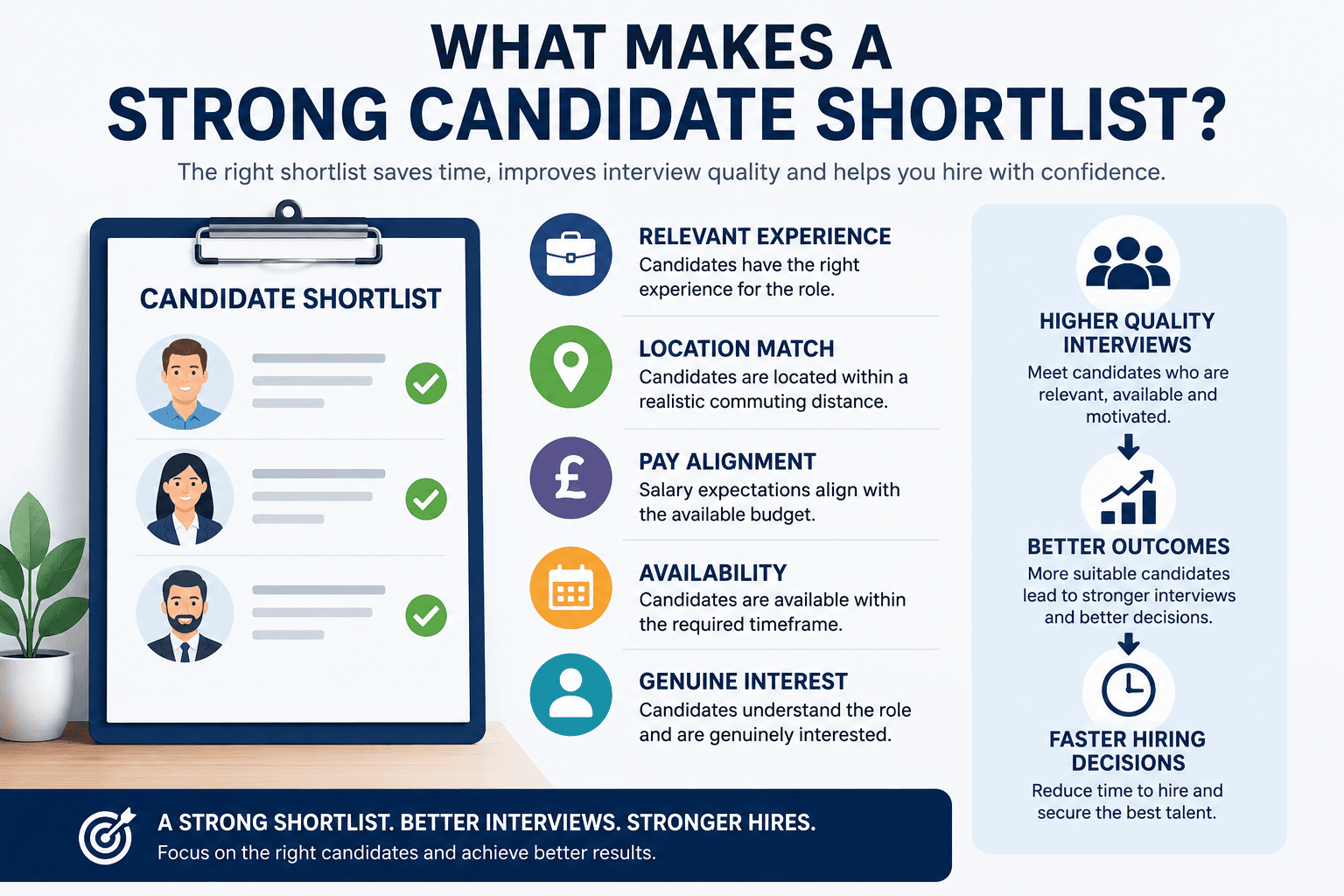
A strong candidate shortlist improves interview quality, reduces hiring delays and supports better hiring decisions.
The quality of a candidate shortlist often determines the success of the entire recruitment process. A strong shortlist helps employers focus on realistic hiring options, while a weak shortlist creates additional workload and delays.
What Is a Candidate Shortlist?
A candidate shortlist is a selection of applicants or sourced candidates who appear suitable for a specific vacancy based on agreed criteria.
The purpose of shortlisting is not simply to reduce numbers. It is to identify candidates who have the highest likelihood of progressing successfully through interview and into employment.
Why Shortlist Quality Matters
Poor shortlist quality creates problems for both employers and recruiters.
- Interview time is wasted
- Hiring managers lose confidence in the process
- Vacancies remain open longer
- Candidate drop-out rates increase
- Placement opportunities are lost
A strong shortlist improves efficiency and helps employers focus on candidates who genuinely match the vacancy requirements.
The Five Elements of a Strong Candidate Shortlist
1. Relevant Experience
Candidates should have experience that aligns with the vacancy requirements. This does not always mean identical experience, but there should be a clear connection between previous roles and the position being filled.
2. Location Suitability
Location remains one of the biggest causes of candidate withdrawal. Candidates who face unrealistic commuting requirements are less likely to attend interview or remain in the role long term.
3. Pay Alignment
A candidate may be suitable on paper but still be outside the available salary range. Pay expectations should be considered before interview whenever possible.
4. Availability
Understanding notice periods and availability helps employers plan realistic hiring timelines and avoid unnecessary delays.
5. Genuine Interest
Candidates who understand the role and are genuinely interested in the opportunity are far more likely to engage positively throughout the hiring process.
Why CVs Alone Are Not Enough
A CV provides valuable information, but it does not reveal everything.
A strong recruitment process also considers candidate motivations, availability, location suitability and potential concerns that may affect hiring outcomes.
This is one reason why many recruiters combine candidate sourcing with structured shortlisting rather than relying solely on incoming applications.
Common Shortlisting Mistakes
- Focusing only on job titles
- Ignoring location challenges
- Failing to confirm salary expectations
- Submitting candidates too quickly
- Sending excessive numbers of CVs without filtering
Employers often prefer a smaller number of highly relevant candidates rather than a large quantity of marginally suitable applicants.
How Recruitment Agencies Improve Shortlist Quality
Many recruitment agencies improve shortlist quality by combining candidate sourcing, qualification and structured review processes.
Rather than simply forwarding applications, recruiters assess suitability against agreed requirements before presenting candidates for consideration.
How JobMatchedCVs Supports Candidate Shortlisting
JobMatchedCVs combines candidate attraction, targeted sourcing and structured shortlist delivery to help employers and recruiters identify suitable candidates more efficiently.
Our process considers experience, location, pay alignment and candidate suitability before shortlists are submitted for review.
This helps reduce wasted interview time and supports faster hiring decisions.
Need Help Building Stronger Candidate Shortlists?
Book a short call to discuss how JobMatchedCVs can support your recruitment activity with targeted sourcing and structured shortlist delivery.
Book a CallEmployer CV Shortlist FAQs
Common questions employers ask when trying to reduce irrelevant applications and improve shortlist quality.
What should employers include in a CV shortlist?
A strong CV shortlist should include relevant experience, location suitability, salary expectations, availability, required qualifications, candidate interest and any key concerns to clarify at interview.
How can employers reduce irrelevant job applications?
Employers can reduce irrelevant applications by using clear job briefs, including pay and location details, adding screening questions and checking candidate suitability before interview.
Why is structured shortlisting important?
Structured shortlisting helps employers save time, reduce internal recruitment workload and focus interview time on candidates who are better matched to the role requirements.
Can JobMatchedCVs help employers shortlist candidates?
Yes. JobMatchedCVs supports employers and recruitment agencies with targeted job advertising, recruiter-led CV search and structured candidate filtering based on agreed role criteria.